Pedro de Alvarado Customs Roof Project
NEWS
NEWS
Customs Structure
Pedro de Alvarado
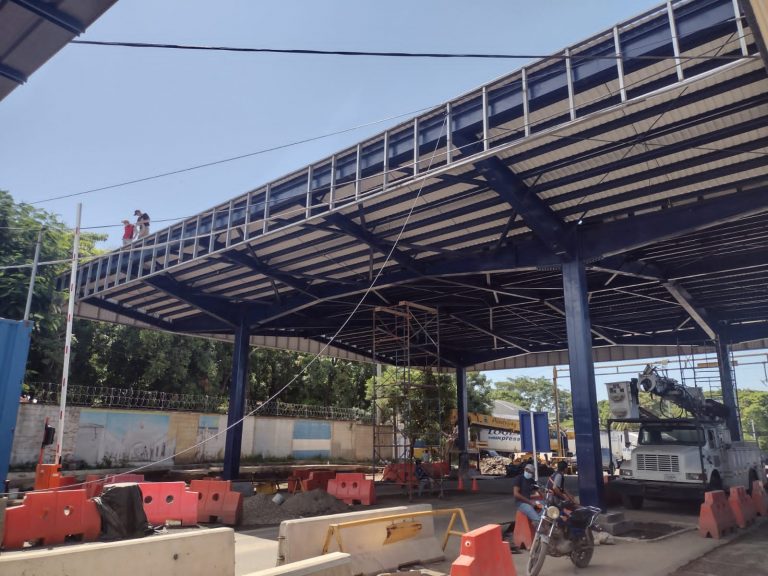
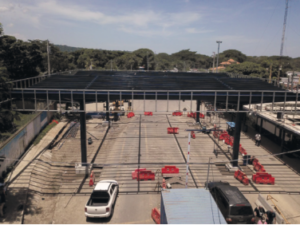
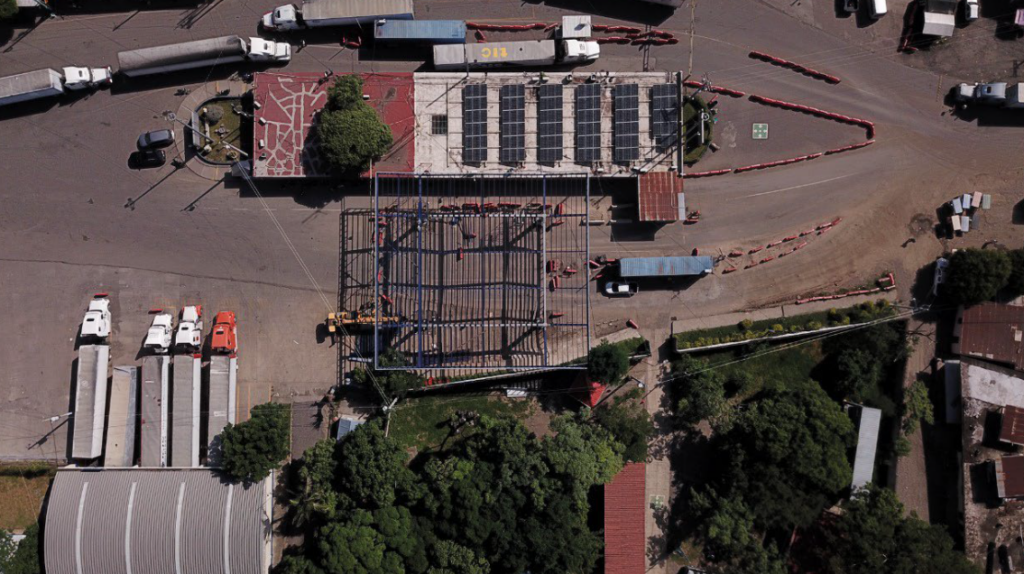
The project consists of building a roof for the imports area at the Pedro de Alvarado Customs Office of the Superintendency of Tax Administration (SAT).
The objective is to build a metal-structure roof that protects drivers and visitors from inclement weather while they complete their customs procedures, as well as SAT staff when they inspect heavy transport before it enters Guatemala.
Project log
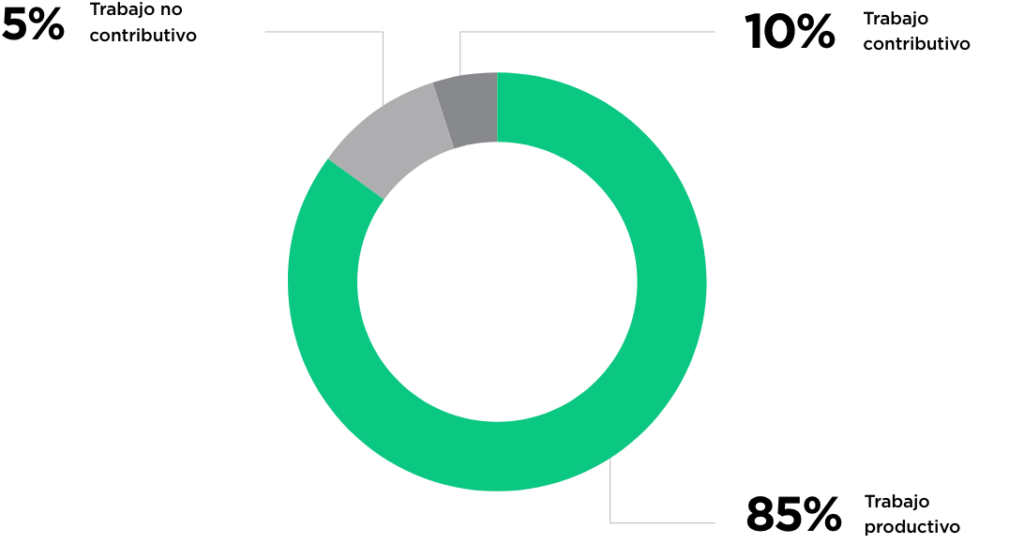
Through our virtual design and construction systems we planned the project and then monitored and controlled it using different software and the AINCO methodology. The main schedule challenges were a restriction on one element imposed by a third party, which made it impossible to continue the project and delayed it, and then, in its final stage, a state of calamity caused by a hurricane in the area. However, with our use of time "buffers" and the effective coordination of "Just In Time" planning, we maximized working time despite the challenge of working on an active road where SAT operations could not shut down.

Interested Entities
The project is carried out for the benefit of the Superintendency of Tax Administration, SAT, with a donation from the people of the United States, USAID, which hired Nathan Associates to manage the contractual operation.
Nathan in turn hired INGECO as project supervisor and designer, and AINCO was hired by Nathan to build the project, subject to all parties.
Customer
Nathan Associates
Measures
Steel roof and columns with a reinforced concrete foundation covering an area of 675 m2.
Location
Kilometer 166 of Central American Highway CA-2 East, Ciudad Pedro de Alvarado, Municipality of Moyuta, Department of Jutiapa, Republic of Guatemala.
Photo gallery
AINCO METHODOLOGY
AINCO CONSTRUCTION PROCESS METHODOLOGY
PROJECT MANAGEMENT
Project management was a challenge because of risks such as inflation and its effect on the project: given the geopolitical context at the time of the bid, there could be a significant variation when making the respective purchases and expenses during the project that would harm it. Good financial and procurement management would determine the success of the project.
LEAN
A LEAN philosophy of continuous improvement was the main focus of the project. It demonstrated the importance of digital tools to improve the efficiency of internal construction processes, and of LEAN lossless construction tools to ensure a PULL approach to progress on site.
Communications management
There were 6 communication channels, which were subdivided much further because of the large number of members in each stakeholder, so the project manager had to convey and communicate the status of the project to all parties in the best possible way.
Look Ahead
The LOOK AHEAD tool was implemented as the main planning communication method among all parties in order to achieve lossless construction and coordinate events outside the scope of AINCO.
Coaspect
Implementation of PMIS software for cloud-based project management under the PMI methodology, which made it possible to keep a digital log of all internal and external processes for AINCO's control and for follow-up by all stakeholders.
Last Planner System
With the LPS tool we were able to coordinate work trains with the supervisor and have a better perspective when the project faced challenges.
BIM
BIM uses were established mainly for the metal structure, the visualization of steel material and the coordination of fabrication, transport and assembly.
Fabrication
Modeling this construction element requires specific knowledge of the fabrication method to be used, so it was crucial to have synchronization between design, modeling and fabrication.
As Built
Having an As Built model allows all stakeholders to view all of the project's information during the different stages of the project, for its operation and maintenance stage.
IPD
A collaborative contract was made in which the project's financial risk was shared, construction needs were established based on the real needs of the project and its users. Changes were established and their costs and benefits were assumed by all parties, always keeping the quality and functionality of the final product as a priority for everyone.
Project Amount
USD 235,000.00
Contract Type
Design - Bid - Build
Aprobado
Work acceptance records signed by all stakeholders.
AINCO METHODOLOGY
4D Y 5D
Construction
Construction began on January 17, 2022, under Resident Engineer Walfred Colindres, who moved to the area with AINCO personnel, where the first preliminary work began: clearing the area, setting up a storage area, topographic layout, and logistics tests with SAT so as not to stop customs operations, along with site signage for the safety of all parties.
Because construction began on an active stretch of road, many precautions were taken for site safety: SAT provided the safety barriers used at the customs office and AINCO also placed tapes and signs intended to guarantee the safety of everyone traveling through the area.
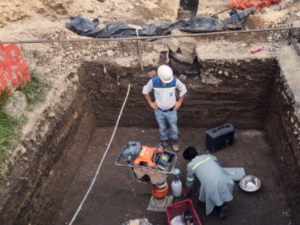
During the topographic layout, our surveying team detected a variation between the field and the design: the terrain was shown as flat in the design, but a slope was measured, so a zero point had to be determined so that the 4 pillars of the structure would remain on the same reference plane. This difference between design and reality is very important because it could have affected the integrity of the project, both constructively and financially; however, the AINCO team quickly identified the discrepancy and resolved it at the right time.
Consequently, excavation of axis B began, with work starting under the logistical restrictions set by SAT and the need to keep the lanes open, even though the foundation axes were located directly in the lanes. This affected our initial planning schedule.
On January 31 the work was stopped because of a restriction outside the scope of AINCO, in which a utility pole did not allow the work to continue. The site was closed, AINCO's equipment was withdrawn, and AINCO supported at all times and offered solutions to resolve the project's restriction. This stoppage has financial, operational and organizational costs; all stakeholders were affected in one way or another.
Once the day and time were agreed with SAT, the 2 axes were poured and finished at ground level as a quality decision by AINCO for greater resistance in the O&M of the customs office, since it is a heavily traveled place.
Once the restriction was resolved, operations resumed on April 5, 2022, and AINCO's team and project manager Eng. Luis Santizo were moved back to the area. Work started again on axis B with the placement of the reinforcement for a connecting beam and its two footings. In this case the footings had the pedestal and the column connected at footing level, so the reinforcement was built according to construction standards for the correct connection between the connecting beams and their respective pedestals.
Excavations began on axis A so that the first pour could be done on both axes simultaneously. Because of the project's location, the logistics of ready-mix concrete depend on the supplier's times and logistics, and this was managed productively to settle the pouring time, considering an adequate temperature and the customs office's operating hours when traffic was heaviest.
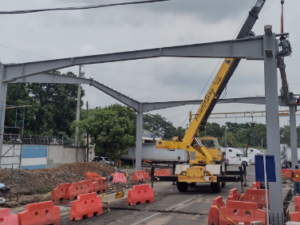
The pour was carried out and the 4 columns arrived at the site from our metal structures workshop, where the metal structure was being fabricated simultaneously. Because of the project stoppage, emphasis was placed on fabricating the structure and assembling the 4 columns and their main beams the week after the pour. Once the frame was built with the crane on site, all the structural elements were mounted so as to proceed with the roof and the fascia.
Finally, the connecting beams of axes 1 and 2 were connected with 50% of the pour in each phase to leave one customs lane open, and lastly the lighting and plumbing work was done.
In the field, the need to open another lane was identified, along with the condition of the road, so an extra lane was poured and, because the pipe had collapsed, drainage pipes were installed to drain the customs area.
Lecciones aprendidas